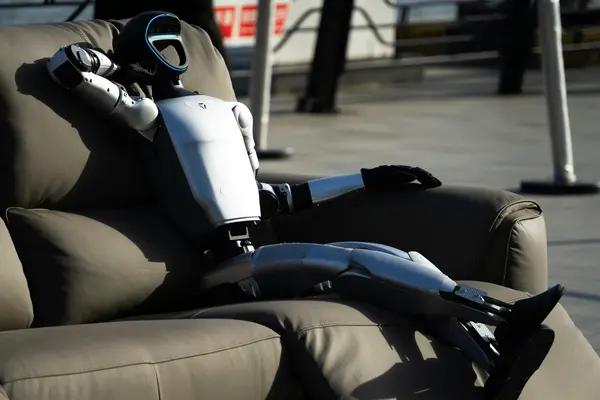

Work-life balance has become one of the defining challenges of modern life. As work accelerates, expectations rise, and digital noise grows louder, people are searching for ways to live with more clarity, calm, and intention. Artificial intelligence is stepping into this space with surprising gentleness — not to replace human effort, but to support healthier rhythms.
By 2035, AI will help people design lives that feel more spacious, more aligned, and more human. Intelligent systems will reduce friction, automate overwhelm, and create room for rest, creativity, and meaningful connection.
1. AI Will Reduce Cognitive Load
Much of modern stress comes from mental clutter — remembering tasks, switching contexts, juggling deadlines, and managing endless digital inputs. AI will help by:
- organising tasks automatically
- prioritising based on energy levels
- summarising information instantly
- reducing decision fatigue
This shift will free up mental bandwidth, allowing people to focus on deeper work and more meaningful moments.
2. AI Will Support Healthier Daily Rhythms
Work-life balance is built on daily habits. AI will help people create routines that support wellbeing by:
- suggesting breaks before stress spikes
- optimising sleep schedules
- adjusting work blocks based on focus patterns
- recommending nutrition changes to support energy
These systems will help people live more intentionally — with less friction and more clarity.
3. AI Will Make Work More Human
As AI automates repetitive tasks, work will shift toward creativity, strategy, and connection. People will spend less time on:
- admin
- reporting
- data processing
- routine communication
And more time on:
- creative exploration
- problem-solving
- collaboration
- relationship-building
Work will feel less mechanical — and more meaningful.
4. AI Will Support Emotional Wellbeing
Emotional balance is essential for healthy work-life rhythms. AI will help people stay grounded by:
- tracking emotional patterns
- suggesting grounding exercises
- offering reflective prompts
- helping users navigate stress with more ease
This support will help people build resilience and maintain healthier boundaries.
5. AI Will Help People Work More Intentionally
Intentional living is about choosing how you spend your time — not reacting to everything around you. AI will help people:
- design work blocks around natural focus cycles
- protect deep work time
- reduce digital noise
- align daily actions with long-term goals
This shift will help people feel more in control of their days — and more connected to their values.
6. AI Will Support Flexible, Human-Centred Work Models
The future of work will be more fluid. AI will help organisations design environments that support:
- remote and hybrid work
- flexible schedules
- asynchronous collaboration
- wellbeing-first cultures
Work-life balance will become a shared priority — supported by intelligent systems that make flexibility easier and more sustainable.
A More Intentional Future
AI will not solve work-life balance alone. But it will create the conditions for people to live more intentionally — with more clarity, more rest, more creativity, and more connection.
The future of work-life balance is not about doing less. It’s about living better — supported by intelligent systems that help us focus on what truly matters.
Read Next
- AI and Creativity: Why the Next Artistic Renaissance Will Be Machine‑Powered
- The Ethics of AI: How We Can Build a Future That’s Safe, Fair, and Human‑Centred
- AI and Ageing: How Technology Will Support Independent Living and Longevity
- The Creator Economy 2035: How AI Will Empower Solo Creators and Micro‑Brands
- AI in Fitness: How Intelligent Training Will Transform Health and Body Recomposition
- The Future of Education: AI Tutors, Adaptive Learning, and the End of Traditional Classrooms
- Smart Cities 2040: How AI Will Shape Urban Living, Safety, and Sustainability
- AI and Mental Wellbeing: How Intelligent Tools Will Support Emotional Health
- The Rise of Personal AI Assistants: How They’ll Redefine Daily Life by 2030
- How Artificial Intelligence Will Transform Quality of Life in the Next 20 Years